Six Worlds, One Sky
What the Planetary Parade Means for Life on Earth

If you stepped outside just after sunset last night, you may have witnessed something quietly extraordinary. Six planets Mercury, Venus, Saturn, Jupiter, Uranus, and Neptune were strung across the western sky in a loose, glittering arc. Not a perfect line. Not a thunderclap of cosmic drama. Just a gentle sweep of light, moving in silence above the horizon, available to anyone who looked up.
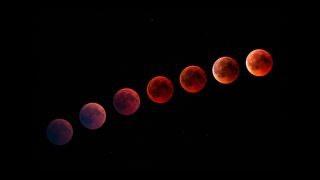
That’s the thing about the universe. It doesn’t announce itself. It just is, and waits for us to notice.
The February 28, 2026 planetary parade has been building buzz for weeks, and rightfully so. Astronomers, astrologers, spiritual teachers, and ordinary people with their necks craned toward the sky have all been drawn in by the same question: what does it mean when nearly half the solar system lines up at once?
The answers, it turns out, depend enormously on who you ask and all of them are worth hearing.
What’s Actually Happening Up There
Let’s start with the science, because it is genuinely beautiful even before you layer anything else on top of it.
The six-planet alignment is the result of a simple, elegant fact about our solar system: all the planets orbit the sun on roughly the same flat plane, known as the ecliptic. Viewed from Earth, that shared plane collapses into a line across our sky. As Dr. Megan Argo, reader in astrophysics at the University of Lancashire, explained in the lead-up to the event: “We’re seeing this alignment now because the planets’ orbits have brought them into roughly the same area of the sky from our perspective on Earth. Since each planet circles the sun at a different speed, they constantly shift position against the backdrop of stars. Only occasionally do their paths line up in a way that places several of them together in our night sky.”
She added that while spotting four or five planets simultaneously is fairly common, six is genuinely rare and the next full lineup of this scale won’t occur again until 2040.
NASA highlighted the date as a “Planetary Parade” in its list of notable 2026 sky events. Four of the six planets Mercury, Venus, Saturn, and Jupiter were visible to the naked eye, with Uranus and Neptune requiring binoculars or a telescope. The viewing window was tight: roughly 30 to 60 minutes after local sunset, looking low toward the western horizon.
For a few minutes, in that narrow corridor of twilight, you could look up and see the solar system laid out before you like a map of where we live.
The Pull of Awe
Even astronomers who dismiss the astrological implications of alignments tend to pause when asked about the human significance of events like this. There’s something in us something very old that responds to the sky with reverence.
Carl Sagan, whose words have never stopped being relevant, put it this way in Pale Blue Dot: “Every one of us is, in the cosmic perspective, precious. If a human disagrees with you, let them live in space for a while and see if they change their mind.” His broader point one he made again and again was that looking at the cosmos has a clarifying effect on the human ego. It is difficult to feel petty or small-minded when you are watching six worlds arc across the heavens.
More recently, astrophysicist Neil deGrasse Tyson has argued that the most important thing a sky event like this can do is spark curiosity. “The universe is under no obligation to make sense to you,” he has said a reminder that our job isn’t to explain the sky away, but to keep asking questions of it. When six planets appear in a single sweep of vision, the question that rises naturally is also one of the oldest: what are we, and where do we fit?
That question doesn’t have a scientific answer. But science can make the asking of it richer.
The Astrological Lens
For astrologers and those who work in the space where ancient symbolic systems meet modern life, a six-planet alignment is not merely a visual spectacle it is a moment of concentrated meaning.
Different traditions read the current alignment differently, but several themes emerge with consistency. Venus, glowing low in the west, represents relationships, beauty, and values. Jupiter, high and bright in the southeastern sky, is associated with expansion, abundance, and wisdom. Saturn, hovering between them, governs discipline, limits, and the long arc of consequence. Mercury fleet, faint, and perpetually close to the sun rules communication, commerce, and the way we process information.
When these energies appear together in the sky at the same moment, many astrologers interpret it as a convergence a period in which the tensions and themes these planets represent are simultaneously active in our collective experience.
Astrologer Chani Nicholas, whose work bridges psychological depth with celestial observation, has written extensively about how planetary cycles invite us to examine what we are building and what we are releasing. In her view, alignments like this are less about predicting the future and more about naming the present giving symbolic language to experiences we are already having. She has noted that major planetary groupings often coincide with periods of heightened collective introspection, the kind of moment when a culture looks up from the daily noise and asks whether it’s moving in the right direction.
Whether or not you believe the planets influence your inner life, there’s something undeniably useful about a symbolic framework that encourages pausing, reflecting, and asking the bigger questions. If a six-planet parade gives a person permission to do that, the planets have done their job.
What We Are Living Through
It is impossible to look at the sky right now without also being aware of what is happening on the ground. We are in a period of extraordinary uncertainty politically, climatically, technologically. Artificial intelligence is reshaping the nature of work and creativity. Trust in institutions is historically low. The planet we live on is warming faster than our systems seem capable of responding to. And yet, simultaneously, there are breakthroughs in medicine, in energy, in our understanding of the human mind.
Philosopher and author Charles Eisenstein, who writes about the intersection of culture, consciousness, and ecological crisis, has observed that moments of collective upheaval often serve as what he calls initiatory experiences periods that crack open old ways of seeing and make new ones possible. He argues that the disorientation many people feel right now isn’t simply a problem to be solved, but a passage to be navigated.
Looking up at six planets arranged in a silent arc might not solve anything. But it can do something that is arguably more foundational: it can remind us that we are very small, that the cosmos is very large, and that the dramas we treat as permanent are in fact brief and passing. Civilizations rise and fall. Stars are born and die. Six planets will continue their patient orbits long after every argument trending on social media has been forgotten.
There is, in that perspective, both humbling and hope.
The Invitation of the Sky
Astronomer and science communicator Natalie Starkey has spoken about how sky events create what she calls “democratic science moments” experiences that require no degree, no equipment, no expertise. You simply need to be outside, looking up, at the right time. In an era when so much of what matters seems locked behind paywalls, credentials, or insider access, the sky remains stubbornly free and open. Last night’s planetary parade belonged to anyone who stepped outside.
That accessibility matters. One of the things the Enlightenment gave us and one of the things we seem to be struggling to hold onto is the idea that truth can be observed, tested, and shared. The planets were there whether you believed in them or not. You could point at them and say: look. In a moment when even basic empirical reality feels contested, there’s something quietly radical about that.
What To Do With It
The planetary alignment peaked on February 28, 2026. If you missed it, Mercury and Venus are already beginning to slip back toward the sun’s glare. But Jupiter and Uranus will remain visible into spring, and the next major celestial event is already on its way: a total lunar eclipse on March 3, visible across Asia, Australia, the Pacific, and the Americas. The sky, in other words, is not done with us.
But here’s the invitation the planetary parade really extends, regardless of whether you caught it:
Look up more often. Not because the planets are sending you messages, but because the act of looking up of pausing, tilting your head back, and registering the scale of what surrounds you changes the quality of your attention. It pries you loose from the urgent and returns you to the important.
We spend so much of our lives looking down: at screens, at spreadsheets, at the cracks in the street, The solar system aligned itself in our evening sky and asked us to look up. That’s an invitation worth taking, even a day late.
The universe doesn’t repeat itself. But it is patient. And it is always, always putting on a show.
If this resonated with you, share it with someone who needs a reason to go outside tonight. And if you have your own photos or reflections from the February 28 alignment, drop them in the comments I’d love to see what you saw.
I wasn’t aware of the celestial event you mentioned, but just reading your message on my laptop gave me great pause and a sense of calmness.
Thanks for reminding us to observe the “bigger picture.”